
-
Annual Reports
-
Concert Reviews
-
Videos
-
Articles

August 17, 2026
FLORIDA CHAMBER MUSIC PROJECT 2025-2026 ANNUAL REPORT
August 15, 2025
FLORIDA CHAMBER MUSIC PROJECT 2024-2025 ANNUAL REPORT
Concert ReviewFCMP Showcases American Music in Performances of Walker and Puts

September 7, 2025 & October 5, 2025Through its first twelve seasons, the Florida Chamber Music Project (FCMP) has established itself as one of Jacksonville’s premiere classical music organizations. FCMP’s season opening concerts on September 7 and October 4 solidified this reputation for its thirteenth season. With plans to present music by American composers throughout the season, and to feature local performers on every program, FCMP proves the relevance of its mission for Floridians today—and the role of classical music in the first 250 years of our nation.
At the season opener, the ensemble filled the Beaches Museum Chapel with the energetic sounds of George Walker’s first string quartet, the “Lyric.” Their bold take on Walker’s balance of mid-century realism with jazz-inflected richness demonstrated a sense of purpose. The four players took turns skillfully leading jaunty phrases, answered by their colleagues with Walker’s colorful chords.
The quartet’s unflinching intensity in the “Allegro” posed a musical question that they then explored in the famous “Molto adagio.” The ensemble’s coordinated unity through the second movement’s flowing phrases heightened the impact of Walker’s interjecting punctuated phrases. The ensemble’s choice of a faster tempo—likely required by the Chapel space’s acoustics, including the motorcycles whizzing down Beach Boulevard—lended Walker’s pizzicati a playful effect. While the first movement’s questions remained open, the performers embodied Walker’s searching journey with sensitivity and surety.
Where George Walker’s first quartet posed a question at the outset that the ensemble then explored, FCMP’s October concert opened with exploration right away. The string quartet entitled “Credo” by contemporary American composer Kevin Puts had the FCMP building up to a statement of belief from almost nothing. From the undefined noises of bows lightly gliding across strings, through a series of minimalist-inspired vignettes with many, many notes, the FCMP guided the audience along Puts’s score with a refined sense of pacing.
The final movement of the quartet brought us to one of the high points of the season so far. After the wandering introspection of the “Credo” movement’s first half, the ensemble’s tone blossomed outward. Embracing listeners in an upward movement, Puts’ statement of belief arrived, before winding back to a pensive closing. While we may have expected a grand ending, the FCMP’s steadied hand embodied Puts’ masterful development—the ensemble’s sound captured the shape of hope.
Each program followed the heft of these two American classics with more traditional fare, albeit not trifles themselves. September’s performance of Schubert’s String Quartet in G Major brought the ambience of the nineteenth-century opera house to the chapel. Mendelssohn’s more serious String Quartet in E minor summoned a symphonic sensibility to October’s program. Through both, the FCMP demonstrated its range while grounding its interpretations of newer American repertoire in the classics.
Matt Bickett - Writer
Matt Bickett is a musician and scholar living in Jacksonville, FL. He is director of music at St. Paul’s by the Sea Episcopal Church in Jacksonville Beach and is a Corps Member with Teach for America.

Concert ReviewIt Must Be Beethoven with The Florida Chamber Music Project
6.1.2025As the lengthening days of spring gave way to the bright heat of summer, the Florida Chamber Music rounded out its season with a strong performance. In this early June program of the first and last string quartets of Ludwig van Beethoven, the FCMP provided a timely glimpse into the life and mind of one of classical music’s most revered composers.
Artistic Director Susan Pardue set the stage for the two monumental string quartets with historical context and with musical demonstrations from her collaborators. From here, the performers started strong with Beethoven’s balanced phrases and a clever conversation among the four parts.
First violinist Victoria Stjerna led the opening Allegro con brio with a confident voice, answered by the supportive presence of cellist Laurie Casseday’s rebuttals. The ensemble devoted the close attention to tuning and sound quality demanded by the movement’s unison phrases, with all four instrumentalists playing the same notes.
The ensemble transformed the conversational exchanges of the first movement to the tomb scene of Shakespeare’s classic “Romeo and Juliet” in the second. This scene, the inspiration for the Adagio affettuoso ed apassionato movement, was conjured in the players darkened sound and soulful phrases. Ranging from the quietest moments of the entire program to some of its most passionate expressions, their expression displayed the FCMP’s ability to invite the audience along on this not-to-be-missed journey.
The folksy Scherzo and energetic Allegro showed off the players’ technical ability. The ensemble injected energy into the fast passages. The music’s dancing themes brought out the performers’ smiles and cheerful glances, and we felt the warmth at joining in on this music among friends.
The ensemble’s reading of Beethoven’s final string quartet brought out both the score’s nostalgia and its joie de vivre. The Allegretto’s pauses highlighted the beautiful match of resonance between the instruments on stage and the chapel’s wood interior—the kind of experience that listeners only have in person.
The Vivace took a surprising turn, with an exuberant energy on the verge of frantic mania. The elderly Beethoven, weary from the political upheaval and debilitating setbacks of his long career, seemed to struggle with an authentic expression of happiness here. The ensemble’s performance conveyed the almost ironic joy with seriousness of purpose, neither shirking away from the confusion of the movement’s mood nor overplaying its misfit character.
The Vivace’s confused laughter gave way to the profound simplicity of the hymn-like Lento assai, cantabile e tranquillo. The ensemble worked together to set the foundation of four equal voices contributing to the overall sound, before first violinist Victoria Stjerna took on the role of soloist over a trio accompaniment. The aria-like effect gave voice to the individual’s journey emerging from the crowd, with Stjerna’s character emphasizing the nostalgia of this final string quartet, albeit hinting at the continued journey ahead.
The program’s finale offered some of the most heady yet approachable music of the afternoon. The question-and-answer format of Beethoven’s Grave, ma non troppo tratto—Allegro built on the development of the previous three movements to explore a simple message. In the FCMP’s hands, the question “must it be?” (in German, “muss es sein?” as Pardue helpfully explained) received the unequivocal, “it must be!”
Like the exploration of ideas around fate by Beethoven’s successors—German scholars’ interest in reincarnation and Nietzsche’s “eternal recurrence,” for example—Beethoven searched for a reason to keep going among the difficulties of life. At the close of their twelfth season, the Florida Chamber Music Project made the case for Jacksonville’s cultural scene to continue supporting audiences in that search.
Matt Bickett - Writer
Matt Bickett is a musician and scholar living in Jacksonville, FL.
Concert ReviewAmerican Music Takes Center Stage with the Florida Chamber Music Project
2.23.2025American music rarely makes the number one spot when thinking about classical music. We most often hear about the German symphonies of Beethoven, the Italian operas of Verdi, and the French piano music of Debussy. Yet American music stole the show in the Florida Chamber Music Project’s February 23 concert, with inspiring results. In the program, featuring two string quartets in G major, one by Florence Price and one by Antonin Dvorak (op. 106), the Florida Chamber Music Project’s four string players made a strong case for the importance of this music through their focused and energetic performance.
The FCMP’s string quartet raised the curtain with their sensitive playing of Price’s opening bars, reminiscent of songs from the early days of Broadway. The stage now set for an old American epic, the players took turns presenting characterful themes, accompanied by the dancing pizzicato (plucked) notes in one moment and sensuous bowed notes the next. Despite moments where intensity covered over subtler details in the score, the ensemble’s coordination convinced us of Price’s vision—all the way to the movement’s dramatic final flourish.
The first movement’s fireworks gave way to the mournful song of the second. Without indulging any sleepiness in the Andante moderato, the players’ singing sound portrayed the religious folksong of the African American spirituals with tenderness. We suddenly shifted back into the classical world with Susan Pardue’s expressive viola solo evoking a tenor aria, although here with the dancing pizzicato of the first movement having returned to accompany. The nostalgic return of the opening spiritual rounded out the movement’s gentle sonic world, bringing the quartet to a close like the curtain slowly falling on an old American film.
We stepped back a few decades with Dvorak’s String Quartet—from the movie theater to the opera hall. An inspiration to Price’s Symphonic music, Dvorak similarly incorporated folk elements and techniques of popular operas into his compositions. The FCMP’s ambitious performance of Dvorak’s quartet conveyed the grand sense of his operatic leanings, while pairing Dvorak’s quartet with Price’s attuned our ears to its folk elements. This bold programming paid off with an energetic account of the work.
Following the lead of first violinist Igor Khukhua, the ensemble stepped into the work with energy and excitement. The score’s fast runs and dramatic outbursts met with an earthy, raw sound that filled the space with the glimmer of the ensemble’s unique voice. Throughout the work’s four movements, the players embodied Dvorak’s operatic characters, from cheerfully energetic in the first movement to menacingly dark in the second with jovial dancing in the final; the full cast came across in the ensemble’s devoted attention to their sound.
The portrayal of Dvorak’s variety of characters by the FCMP demonstrated the beauty of diversity in music—a virtue celebrated throughout the program’s mixture of folk and classical. This timely reminder gave Sunday’s moving performance a deeper sense of urgency, and the performance’s quality gave us hope for such celebrations of diversity to continue.
Matt Bickett - Writer
Matt Bickett is a musician and scholar living in Jacksonville, FL.
Concert ReviewCelebrating Mozart's Birthday with the Florida Chamber Music Project
1.19.2025The Florida Chamber Music Project hosted one of Jacksonville’s finest celebrations of Mozart’s birthday on Sunday, January 19th. Perhaps the most famous composer of classical music, Wolfgang Amadeus Mozart’s enduring popularity inspired brilliant performances by the Florida Chamber Music Project with guest pianist Hyunsoon Whang and clarinetist Giovanni Bertoni. Braving the cold and rain, the performers’ bright camaraderie shined through this celebratory program ranging from the Fantasy in D minor for solo piano to the Trio in E-flat Major and Piano Quartet in G minor.
Whang opened the program with the mysterious, searching quality of Mozart’s Fantasy. Her performance captured the improvisational spirit of the piece’s first bars, bringing a refined clarity of tone and sense of direction. In the work’s aria-like phrases and sweeping passages, Whang’s sensitive playing evoked the sets and costumes of the opera stage. Whang’s full, open sound in the cheerful ending set the stage for the chamber works to follow.
Bertoni and violist Susan Pardue then joined Whang on stage for Mozart’s playful “Kegelstatt” trio. Before the piece, Pardue, also FCMP’s Artistic Director, explained how this work reflects the FCMP’s mission of fostering joy and connection in their “Music Among Friends” series.
The Trio’s introduction showcased the play of music among friends, with the phrases energetically passed from viola to clarinet to piano. The extroverted energy of the middle movement helped to overlook tuning difficulties in some phrases, and the work’s grand finale brought the entire performance together with excitement. Throughout, the chapel space’s woody resonance complimented the blend of Bertoni’s soaring phrases with Pardue’s warm tone and Whang’s sensitively supportive sound.
The concert’s largest work, the Piano Quartet in G minor, brought violinist Victoria Stjerna and cellist Laurie Casseday to the stage. Following Pardue’s helpful pre-performance guide through the work, including a short demonstration of the first movement’s theme, the audience nodded with recognition of Mozart’s various changes to the theme throughout the movement.
The performers responded with an intensified focus on the movement’s dramatic character. With the second movement’s reprise of the operatic spirit of the concert’s opening Fantasy, the expressive quality of the string players’ vibrato brought Mozart’s creative composition to life. The dancing rhythms and sunny tone of the Quartet’s lively conclusion rounded out this musical celebration of Mozart’s life among a full house of friends.
Matt Bickett - Writer
Matt Bickett is a musician and scholar living in Jacksonville, FL.
First Coast Connect: Florida Chamber Music Project
Friday Musicale: Interviewing Susan Pardue
Watch: FCMP & First Coast Connect
Watch: FCMP & Solutionaries
One initiative of the Florida Chamber Music Project is our music education program with the North Florida School of Special Education. Our performances there for their middle and high school students have been very successful and enjoyable for everyone. To learn more about how our music education programs have benefitted NFSSE students, please view this video from News4Jax’s Vic Micolucci: |
We’re excited to be guest performers at Cameron University on October 11th 2024

"Florida Chamber Music Project to join Hyunsoon Whang in concert"
Read the article:
" Consider supporting chamber music groups in intimate settings in Jacksonville"
By: Marcia Pledger - Florida Times-Union

September 27, 2022
THE ROTARY FOUNDATION OF PONTE VEDRA BEACH MAKES AWARD TO FLORIDA CHAMBER MUSIC PROJECT
Jacksonville Beach, FL --- The Rotary Foundation of Ponte Vedra Beach awarded the Florida Chamber Music Project (FCMP) a $1500 grant as part of the Foundation’s program to fund worthwhile projects and programs in the community that are developed by nonprofit organizations. The award was made on September 18th after FCMP’s season opening concert.
“We are thrilled to be recognized by the Ponte Vedra Beach Rotary Foundation,” said Susan Pardue, FCMP Artistic Director. “We believe that our concerts are about music among friends. This award will assist us in continuing our work of 10 years.”
“The Ponte Vedra Beach Rotary Foundation is proud to support the efforts of the Florida Chamber Music Project with this grant. We are delighted that we can help the organization and are inspired by the beautiful music it brings to the beaches community,” said Beverly Flanagan, board member of the Ponte Vedra Beach Rotary Club.
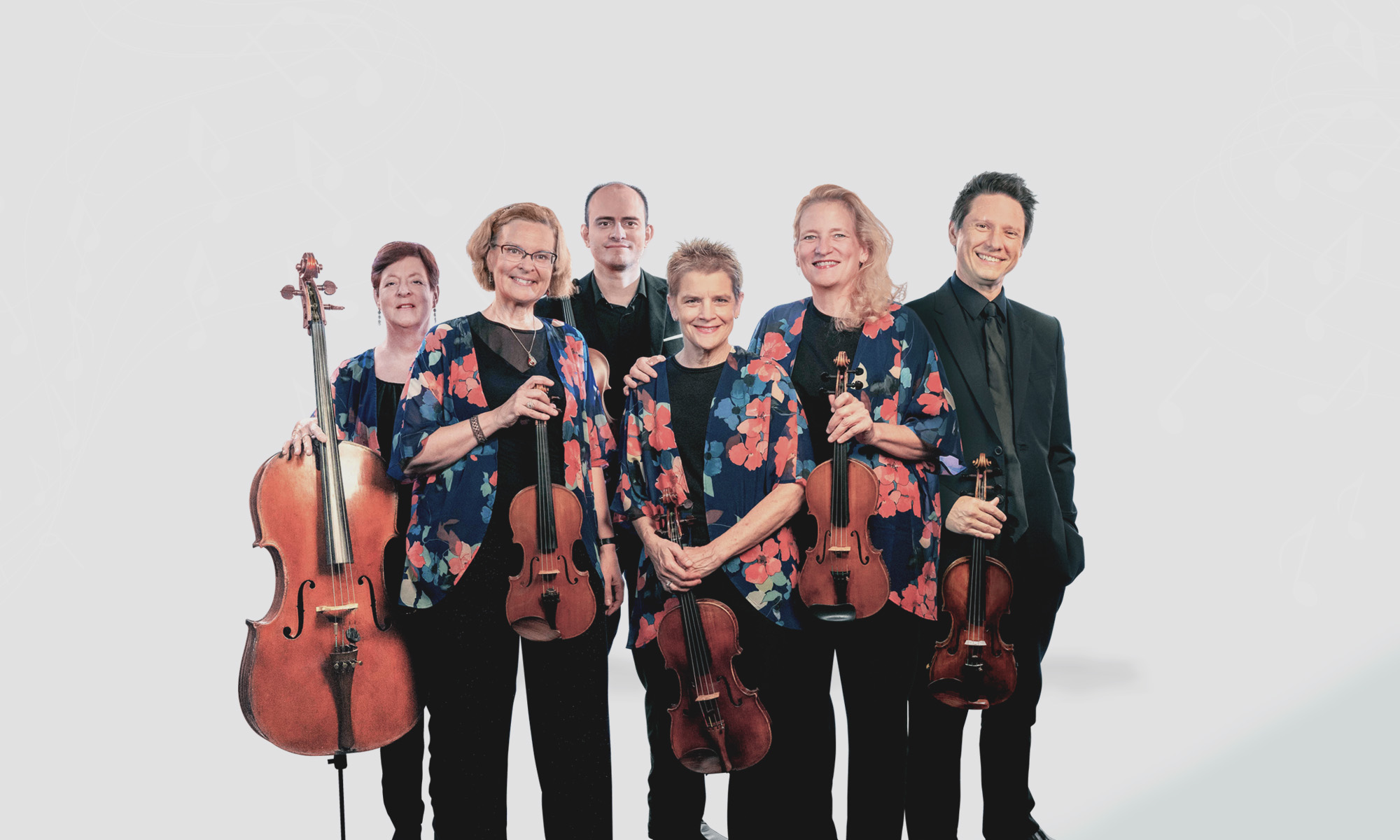
The Florida Chamber Music Project was founded 10 years ago by violist Susan Pardue. Joining her are violinists Patrice Evans, Siyu Zhang and Ann Hertler and cellist Laurie Casseday. All are members of the Jacksonville Symphony.
For advance tickets online: https://flchambermusic.org/ . Follow Florida Chamber Music Project on Facebook, Instagram and Twitter (@FLChamberMusic). FCMP’s next concert is November 20th.

September 27, 2022
SALLY PETTEGREW NAMED ADMINISTRATIVE DIRECTOR OF FLORIDA CHAMBER MUSIC PROJECT
Jacksonville Beach, FL --- Sally Pettegrew, former Vice President of Administration and Human Resources of the Jacksonville Symphony, was named Administrative Director of the Florida Chamber Music Project (FCMP). Susan Pardue, Artistic Director and Founder of FCMP made the announcement.
Pettegrew most recently served as Executive Assistant to the President of The Community Foundation for Northeast Florida. She has more than 30 years of experience in the classical music world through her work with the Jacksonville Symphony. She established the Symphony’s human resources department, counseled 10 Executive Directors/Presidents on leadership transitions and oversaw the Jacksonville Symphony Starry Nights concerts at Metropolitan Park.
“We are delighted to be working with Sally again,” said Susan Pardue. “Her knowledge of presenting music and organizational skills will be of great benefit to us.”
FCMP is celebrating a decade of performances and will open its season on September 18th at the Beaches Chapel at the Jacksonville Beach Museum. Season tickets for the six concert series cost $150 and are available online at flchambermusic.org. Individual concert tickets are $27.
The Florida Chamber Music Project includes violist Susan Pardue, violinists Patrice Evans, Siyu Zhang and Ann Hertler and cellist Laurie Casseday. All are members of the Jacksonville Symphony.
